
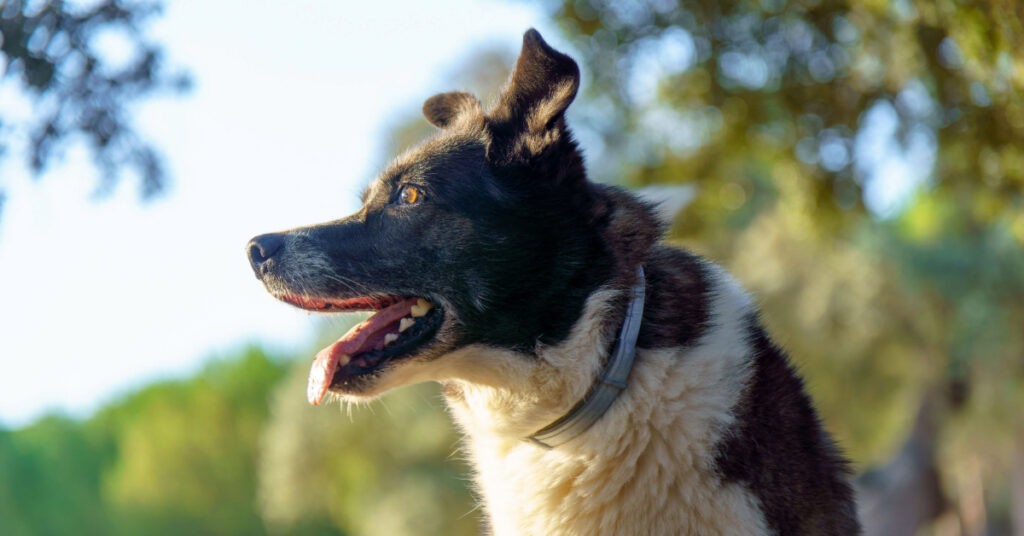
If your dog is breathing heavier or faster than normal, working harder to pull air in, or making unusual sounds with each breath, labored breathing could be the reason, and it’s a symptom worth taking seriously. Dog labored breathing can range from a mild, temporary change after exercise to a sign of a serious underlying condition affecting the heart, lungs, or airway. At Sunset Animal Hospital in Houston, dog labored breathing is one of the more common reasons pet owners bring their dogs in for an urgent look, since breathing changes can escalate quickly if left unaddressed. Below, we’ll explain what dog labored breathing looks like, the different patterns it can take, how it differs from normal breathing, when it’s time to head to the vet, and what diagnosis and treatment usually involve.
Why Is My Dog Breathing Heavy?
Dog labored breathing happens when a dog has to work noticeably harder than usual to move air in and out of their lungs. It can stem from something as simple as heat and excitement or point toward a more significant respiratory or heart-related issue. The effort often shows up in the chest, throat, or belly, and can appear suddenly or build gradually over days or weeks, which is part of why owners sometimes don’t notice it right away.
Types of Labored Breathing in Dogs
Dog labored breathing shows up in a few distinct patterns, and recognizing which one you’re seeing can help guide how urgently you respond:
- Tachypnea, or rapid shallow breathing, often linked to pain, fever, or anxiety
- Dyspnea, or visibly difficult breathing, where the dog appears to be working hard with each breath
- Open-mouth breathing at rest, which is unusual for dogs outside of active panting after exercise
- Noisy breathing, including wheezing, honking, or a rasping sound during inhalation or exhalation
- Paradoxical breathing, where the chest and belly move in opposite directions, which can signal significant respiratory distress
Common Triggers Behind Heavy Breathing
Heat, recent exercise, excitement, and stress are the most common everyday triggers of temporary heavy breathing in dogs. Overweight dogs and brachycephalic breeds, such as Bulldogs and Boxers, tend to show labored breathing more readily because of their airway structure, even during ordinary everyday activity like a short walk or a car ride. Senior dogs and those carrying extra weight often need a closer look sooner rather than later, since their margin for extra respiratory effort tends to be noticeably smaller than a younger, leaner dog’s.
Labored Breathing vs. Normal Breathing in Dogs
Telling normal panting apart from true dog labored breathing is one of the most useful skills a pet owner can develop, and it often comes down to where the effort is happening and how quickly it resolves. Paying attention to the pattern, not just the volume of the sound, tends to give the clearest read on whether something needs a closer look.
Upper Airway vs. Lower Airway Signs
Dog labored breathing tied to the upper airway, such as the throat or windpipe, often produces loud, harsh sounds on inhalation, sometimes described as a honking or snoring noise even while the dog is awake and active. Labored breathing linked to the lower airway or lungs, on the other hand, tends to look like rapid, shallow breaths with visible effort in the chest and belly, sometimes without much noise at all, which can make it easier to miss in its early stages. Noting whether the sound happens specifically on the inhale, the exhale, or both can also give your vet a genuinely helpful clue.
Signs Your Dog’s Breathing Is Actually a Problem
Normal panting is typically open-mouthed, rhythmic, and resolves once your dog cools down or calms down, usually within ten to twenty minutes at most. Dog labored breathing, by contrast, often continues at rest, involves visible chest or belly movement, and may include blue or pale gums, a stretched-out neck, or flared nostrils. A resting respiratory rate consistently above 40 breaths per minute is generally considered a signal worth monitoring closely, especially if it doesn’t settle after a few quiet minutes. Counting breaths for 30 seconds and doubling the number is an easy way to get a rough baseline while your dog is calm and resting, and it’s worth doing occasionally even when your dog seems fine so you know what’s normal for them.
When To Go to Your Houston Vet
Knowing when dog labored breathing crosses the line from concerning to urgent can make a real difference in outcome, and having a clear general framework in mind ahead of time helps you act quickly instead of second-guessing in the moment.
Emergency Signs That Need Immediate Care
Seek emergency veterinary care right away if dog labored breathing is paired with any of the following:
- Blue, gray, or pale gums and tongue
- Collapse, extreme lethargy, or inability to stand
- Choking sounds combined with visible panic
- Breathing that does not improve after a few minutes of rest in a cool, calm space
- A distended or swollen abdomen alongside rapid, shallow breaths
Non-Emergency but Still Worth a Visit
Dog labored breathing that comes and goes, worsens with mild activity, or has developed gradually over days or weeks still deserves a same-day or next-day appointment with Sunset Animal Hospital, even if your dog isn’t in obvious crisis. Catching a gradual change early often leads to a simpler treatment path than waiting until symptoms become severe. Keeping a short log of when the heavy breathing happens, how long it lasts, and what your dog was doing beforehand can give your vet useful context during the appointment.
How Vets Diagnose and Treat Labored Breathing in Dogs
Diagnosing dog labored breathing usually starts with identifying whether the issue originates in the heart, lungs, airway, or somewhere else entirely, since each of those systems calls for a genuinely different diagnostic approach and treatment path going forward.
Diagnostic Tools Vets Use
Veterinarians typically begin with a physical exam, listening closely to the heart and lungs, followed by chest X-rays to look for fluid, masses, or an enlarged heart. Bloodwork, an EKG, or ultrasound imaging may follow depending on what the initial exam and X-rays suggest, helping narrow down the exact cause behind the labored breathing. In some cases, a specialist referral for advanced imaging or a cardiology workup may be recommended if the initial findings point to a complex heart or lung condition.
Treatment Approaches Based on the Underlying Cause
Treatment for dog labored breathing depends entirely on the diagnosis. Options range from oxygen support and medication for heart or lung conditions to surgery for airway obstructions or growths. Dogs with chronic conditions, like collapsing trachea or heart disease, often benefit from an ongoing management plan built around their specific diagnosis and response to treatment, including regular rechecks to adjust medications as needed. Weight management and controlled activity levels are also frequently part of the plan for dogs whose labored breathing is tied to excess weight or airway anatomy.
Sunset Animal Hospital Is Ready to Help Your Dog Breathe Easier Again
Dog labored breathing is one of those symptoms that’s always worth a closer look, since breathing problems can shift from manageable to urgent faster than owners expect. Our team at Sunset Animal Hospital in Houston has the diagnostic tools and experience to identify what’s behind your dog’s labored breathing and get a treatment plan moving quickly. If you’ve noticed any change in how your dog breathes, whether subtle or sudden, call (713) 526-5881 or book an appointment online and let our team help you figure out the next right step for your dog’s care. Trusting that instinct and scheduling an exam sooner rather than later is almost always the safer choice when breathing is involved.