
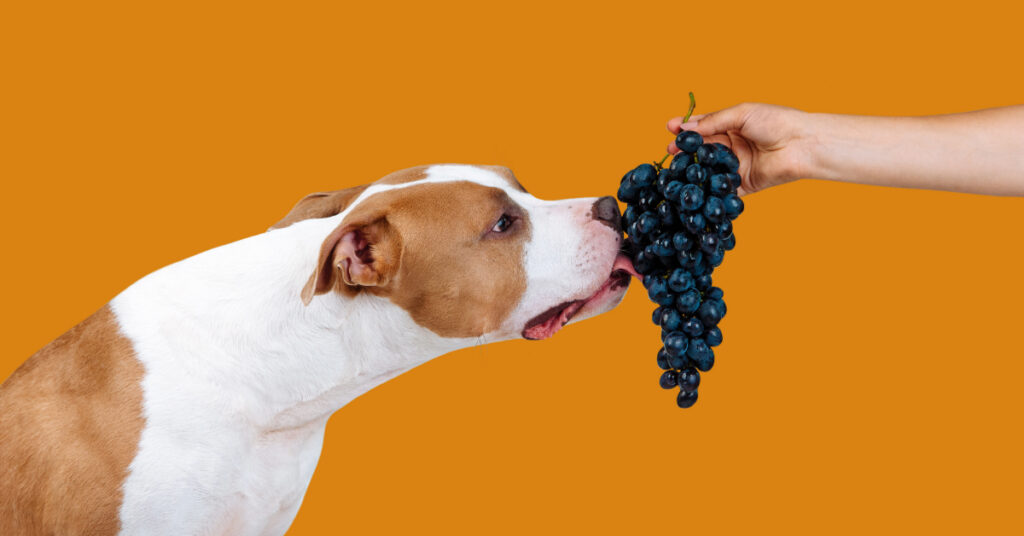
If your dog ate a grape, even just one, it’s worth taking seriously and acting quickly rather than waiting to see what happens. Dog eating grapes situations are one of the more urgent, time-sensitive calls we get at Sunset Animal Hospital in Houston, since grapes and raisins can cause sudden kidney failure in dogs, and the exact reason why still isn’t fully understood by veterinary science. Because there’s no way to reliably predict which dogs will react badly, every dog eating a grape scenario gets treated as a potential emergency rather than something to monitor casually from home. This applies whether the grapes were fresh, dried as raisins, or baked into something like a muffin or trail mix, since the toxic compound is believed to remain present regardless of preparation. Below, we’ll explore why grapes are dangerous, what to do right away if your dog ate grapes, what treatment usually looks like, and what recovery tends to involve.
Why Are Grapes Toxic for Dogs?
Grapes and raisins are toxic to dogs, and even a small amount can trigger acute kidney injury in some dogs, regardless of breed, size, or age. This makes grapes one of the more unpredictable common food toxins that veterinarians see, since two dogs of similar size can have completely different reactions to the same amount.
What Makes Grapes Dangerous
The exact toxic compound in grapes hasn’t been definitively identified, which is part of why a dog eating a grape situation is treated so seriously across veterinary medicine. What’s clear is that some dogs develop kidney failure after eating grapes while others show no symptoms at all, and there’s currently no reliable way to predict in advance which dogs are at risk. Research has looked closely at tartaric acid as a possible culprit, but even that theory doesn’t fully explain why some dogs tolerate grapes without any issue at all.
How Many Grapes Are Too Many
Because the toxic dose varies so much between individual dogs, there is currently no known safe amount, which is why even a single dog eating a grape incident warrants a call to your vet. A larger dog eating just one grape carries real risk, just as a smaller dog eating several does, since body weight doesn’t reliably predict how a dog will react.
Raisins are considered even more concentrated than fresh grapes, since the drying process concentrates whatever compound is responsible for the toxicity, so a small handful of raisins can be just as concerning as several fresh grapes. This is worth keeping in mind around the holidays, when raisin-containing baked goods and trail mixes are more likely to be within a dog’s reach.
What Can I Do if My Dog Ate Grapes?
If you’ve confirmed or strongly suspect your dog ate a grape, prompt action matters more than trying to wait and watch for symptoms, since early treatment is closely tied to a better outcome.
Steps to Take Right Away
- Call Sunset Animal Hospital at (713) 526-5881 or an emergency veterinary provider immediately if your dog ate a grape, even if they seem completely fine in the moment, since symptoms of kidney injury can take a day or more to appear.
- Try to determine roughly how many grapes were involved and when it happened, since this information helps your vet plan the right course of action.
- If any packaging is available, such as a container the grapes or raisins came from, having it on hand can also be useful. Even if you only saw your dog near an empty bag or bowl and aren’t fully certain, it’s still worth calling to talk through what you observed.
What Not to Do
Do not attempt to treat a dog eating a grape situation at home without veterinary guidance, since inducing vomiting or giving other substances incorrectly can cause additional harm and may not remove the toxin effectively anyway. Veterinary professionals have the training and tools to manage this safely, which is why a phone call to the clinic should always be your first move rather than a home remedy. Waiting to see if symptoms develop before calling is also risky, since by the time symptoms appear, kidney damage may already be underway.
What Can My Vet Do if My Dog Ate a Grape?
Veterinary treatment for a dog eating a grape situation typically focuses on preventing the toxin from being absorbed and supporting kidney function during the following days, since early intervention gives the kidneys the best chance to stay unaffected.
Initial Treatment Approach
Your vet may induce vomiting under controlled conditions if the ingestion was recent, followed by activated charcoal to help bind any remaining toxin in the digestive tract. From there, treatment usually shifts toward IV fluids to support kidney function and flush the system, since this supportive care plays a central role in a dog ate a grape recovery plan. The exact protocol can vary depending on how much time has passed since ingestion and how your dog is doing on initial exam, and your vet will explain each step as it happens.
Ongoing Monitoring and Bloodwork
Bloodwork to check kidney values is typically repeated over the following days, since kidney injury from grape toxicity doesn’t always show up immediately on the first set of results. Dogs who ate a grape often need to stay under observation for 48 hours or longer, allowing the veterinary team to catch any concerning changes in kidney function before they become severe. This monitoring period is a critical part of the overall treatment plan, even for dogs who seem completely normal at the outset.
Will My Dog Recover After Eating a Grape?
The outcome for a dog eating a grape case depends heavily on how quickly treatment began and how the individual dog’s kidneys respond, which is another reason early veterinary involvement matters so much.
Factors That Affect the Outcome
Dogs treated promptly, ideally within a couple of hours of ingestion, generally have a significantly better prognosis than those whose treatment was delayed. The amount consumed, the dog’s overall health going in, and how quickly kidney values are monitored and managed all play a role in the eventual outcome. Dogs with pre-existing kidney conditions may face additional risk and warrant even closer monitoring throughout the entire process, from initial treatment through the following weeks.
What Recovery Typically Looks Like
Many dogs who receive prompt treatment recover fully with no lasting kidney damage, while dogs with delayed treatment or more severe reactions may face a longer recovery or ongoing kidney monitoring. Your vet will track bloodwork trends closely to determine when it’s safe to consider your dog out of the woods, and in some cases will recommend a follow-up recheck even after your dog is discharged and seems to be doing well. Appetite, energy levels, and urination patterns are all things your vet may ask you to watch for at home during the days following treatment, as these can offer early clues if something isn’t progressing as expected.
Sunset Animal Hospital Is Ready if Your Dog Got Into Grapes
A dog eating a grape moment can feel alarming, but fast action gives your dog the very best possible chance at a full recovery. Our team at Sunset Animal Hospital in Houston is equipped to respond quickly to grape ingestion and guide you through every step of treatment and monitoring.
If your dog has gotten into grapes or raisins, call us right away at (713) 526-5881, so we can help protect your dog’s kidneys and get them back to feeling like themselves. Keeping grapes and raisins well out of reach going forward is one of the simplest ways to avoid facing this situation again.