If you have ever paused mid-step because your cat suddenly hissed, you already know how powerful that sound can feel. Hissing is not random, dramatic, or spiteful. It is a form of communication rooted in instinct and emotion. When pet owners ask why cats hiss, the answer often blends fear, stress, boundaries, and self-protection into one sharp exhale. At Sunset Animal Hospital, we see hissing as a message, not a behavior to punish. Once you understand why cats hiss, you can respond with more confidence, patience, and empathy.
What Does Cat Hissing Sound Like?
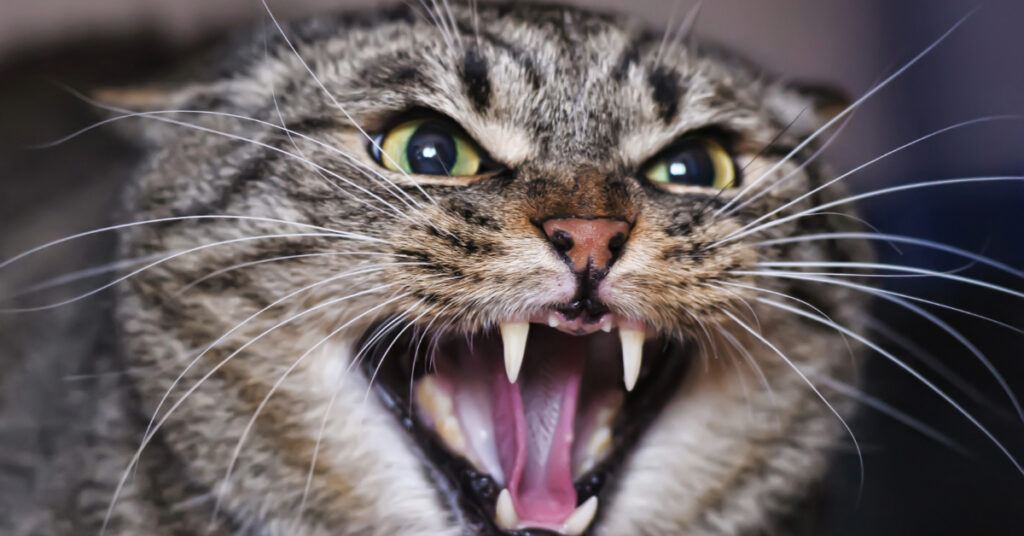
Cat hissing produces a sharp, forceful burst of air through an open mouth, often paired with flattened ears, wide pupils, and a stiff body posture. Many pet owners describe it as a cross between a snake’s hiss and a warning whistle. The sound is intentional. It exists to create distance.
When people wonder why cats hiss, they often focus only on the sound. Body language matters just as much. A cat may arch their back, puff up their fur, or hold their tail low or rigid. These signals work together to make the cat appear larger and more threatening to whatever they perceive as a threat.
Hissing does not always mean aggression. It usually means the cat feels overwhelmed, frightened, or uncertain. Understanding why cats hiss starts with recognizing that the behavior is defensive more than offensive. Your cat is asking for space, not trying to start a fight.
Some cats hiss softly. Others produce a loud, prolonged sound. Both versions communicate the same message: “I need distance right now.” When you understand why cats hiss, the sound becomes less alarming and more informative.
Why Do Cats Hiss?
The question “why do cats hiss” rarely has just one answer. Cats hiss because something in their environment feels unsafe, unfamiliar, painful, or overstimulating. The cause may be physical, emotional, or situational.
Common reasons cats hiss include:
- Fear of unfamiliar people, animals, or environments
- Pain or discomfort when touched or moved
- Territorial stress around other pets
- Overstimulation during petting or play
- Feeling cornered or unable to escape
A cat does not need to be aggressive to hiss. Even gentle cats will hiss when their boundaries feel threatened. If you ask why cats hiss at family members, the answer often lies in sudden movements, loud noises, or unexpected handling.
Hissing During Handling or Petting
Some cats enjoy affection only in short bursts. When petting goes on too long, nerves become overstimulated. The cat may hiss as a warning before escalating to swatting or biting. This explains why cats hiss even when they previously seemed relaxed.
Hissing Around Other Pets
Multi-pet households often prompt the question why do cats hiss at dogs or other cats. Territorial instincts play a major role. A cat may hiss to protect food bowls, resting areas, or their favorite human.
Hissing and Stressful Events
Carriers, travel, vet visits, guests, renovations, and loud celebrations can all trigger hissing. In these moments, it becomes easy to answer why do cats hiss: they feel out of control.
Understanding why do cats hiss helps owners respond calmly instead of reacting emotionally.
What Should I Do If My Cat Hisses?
When your cat hisses, the best response is respectful space. Avoid forcing interaction or trying to “correct” the behavior. Hissing works because it prevents conflict. If ignored, it can escalate.
Helpful responses include:
- Pause and give your cat distance
- Speak calmly and avoid sudden movement
- Allow your cat to retreat if they choose
- Observe what triggered the reaction
When pet owners ask why cats hiss, they often follow with concern about discipline. Hissing is not a behavior that benefits from punishment. It benefits from understanding.
Creating a Calm Home Environment
Small adjustments can reduce stress that leads to hissing:
- Provide quiet resting spaces away from foot traffic
- Keep consistent feeding and play routines
- Offer vertical spaces like cat trees or shelves
- Allow hiding options during busy moments
These steps support emotional comfort. When cats feel safe, they’re less likely to hiss.
When Hissing Becomes Frequent
If hissing becomes a daily pattern, something deeper may be influencing your cat’s behavior. Changes in health, environment, or household dynamics often play a role. Observing patterns helps your veterinary team understand why your cat is hissing.
Sunset Animal Hospital encourages pet owners to call (713) 526-5881 or book an appointment online when behavior changes feel sudden, intense, or persistent.
Reading the Full Body Language Picture
Hissing rarely appears alone. It comes with posture, facial expression, and movement. When owners learn to read these signals, it becomes easier to understand why your cat is hissing.
Look for:
- Ears flattened sideways or backward
- Dilated pupils
- Rigid legs or crouched stance
- Tail flicking or puffed fur
Each of these adds context. Hissing plus crouching often signals fear. Hissing plus stiff posture may signal boundary enforcement. Understanding why your cat is hissing depends on reading the full picture, not just hearing the sound.
Can Hissing Ever Be Playful?
Hissing during play is less common but can occur when play becomes too intense. A cat may hiss to reset the interaction. This does not mean play should stop forever. It simply means boundaries need to be respected. If your cat is hissing during play, take a moment to pause, redirect, and resume gently.
How Owners Can Build Trust
Trust reduces hissing. Calm handling, predictable routines, and gentle communication create emotional safety.
Helpful habits include:
- Letting your cat approach you
- Respecting signs of overstimulation
- Using soft voices
- Avoiding forced holding
These steps teach your cat that communication works, and, over time, you’ll likely notice less hissing.
When to Involve Your Veterinary Team
Hissing is not a flaw in your cat’s personality. It is a survival-based communication tool. When you understand why cats hiss, you stop hearing aggression and start hearing emotion. You learn when your cat feels frightened, overstimulated, territorial, or simply in need of space.
If your cat’s hissing behavior changes suddenly, increases in frequency, or pairs with other changes in appetite, mobility, or personality, a veterinary visit offers clarity. Behavioral changes often reflect deeper discomfort or stress. Sunset Animal Hospital welcomes conversations about behavior. Our team helps pet owners understand why do cats hiss and how to interpret what their cats are communicating. You can call (713) 526-5881 or book an appointment online to start that conversation.